













In 2023, the National Bureau of Enforcement initiated several substantial legislative reforms and introduced new services, including:
The recently approved Enforcement Code by the Parliament of Georgia for the first hearing.
A service for the registration of bribery agreements, facilitating the registration of lease and rental agreements with the National Bureau of Enforcement. The latter allows parties to issue a writ of execution without court intervention in case of contract violations.
The information security policy document is designed to fully safeguard the information data of the National Bureau of Enforcement as a critical information subject.
The Bureau is actively progressing towards developing a unified approach to service provision as outlined in the "State Services Development Strategy 2022-2025." Automation of processes, integration of artificial intelligence in proceedings, and the refinement of the electronic system with various administrative bodies are underway.
There is a growing emphasis on the role of mediation and social workers in enforcement proceedings. A feedback system is developed to investigate customer requests and complaints, with the mediation department using the analysis of results to further adapt the work process to the parties involved.
Efforts are being made to make enforcement services accessible to people with disabilities. The National Bureau of Enforcement plans to adapt its administrative building for this purpose and, starting in 2024, offer a website specifically tailored for disabled individuals.
The National Bureau of Enforcement aims to promptly publish a detailed report of its 2023 activities to the public through social channels and its website.
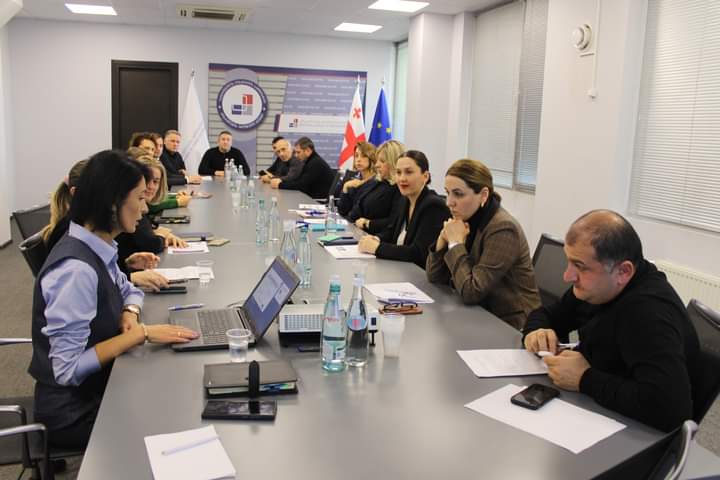
The heads of the departments of the National Bureau of Enforcement presented the report of activities performed in 2023, according to the fields, to the Deputy Minister of Justice, Erekle Gvinianidze, and the Chairman of the National Bureau of Enforcement, Mirian Kharabadze.


